Companies Using Predictive Personalization and Intelligent Automation: Mobile App Development Company near Calgary & Toronto’s AI Shift
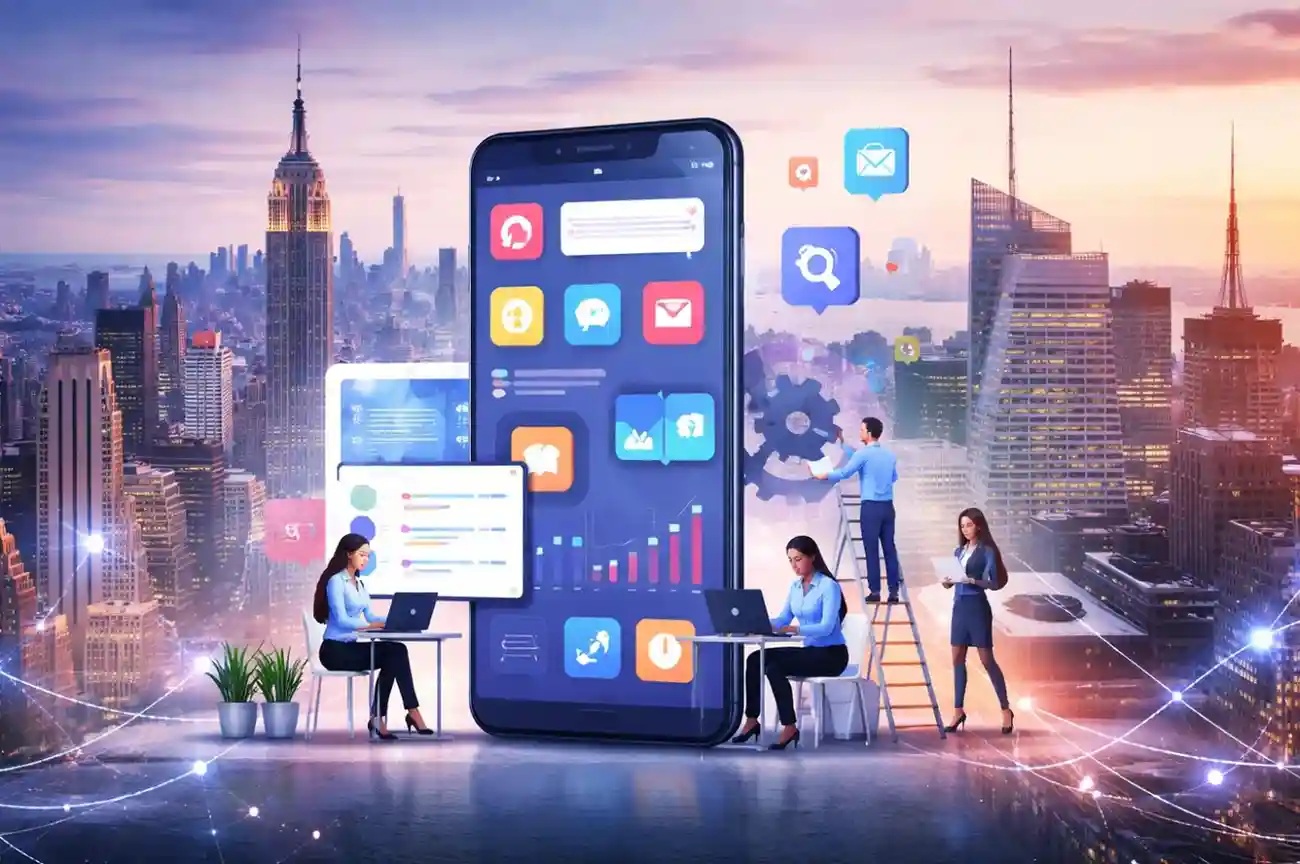

Toronto is becoming an increasingly important centre for artificial intelligence, automation and data-driven software. Vector Institute reports that Ontario established 121 new AI companies in 2025–26, while 5,813 AI jobs were created. The trend matters for mobile businesses because predictive models can turn ordinary applications into systems that anticipate customer needs rather than simply respond to clicks.

Predictive Personalization Moves Beyond Recommendations
Modern mobile applications can analyse browsing patterns, purchase history, location, preferences and real-time behaviour to determine what a user may need next. McKinsey found that 71% of consumers expect personalized interactions, while companies growing faster derive 40% more revenue from personalization than slower-growing peers. AWS and Google Cloud similarly demonstrate how recommendation engines can deliver real-time personalized experiences through mobile applications.
Toronto Companies Show What Is Possible
Several Toronto-founded technology companies illustrate this direction. Ada, founded by Mike Murchison and David Hariri, has built AI-driven customer-experience technology around automated interactions. Cohere, founded in Toronto, develops enterprise AI models that can support intelligent language-based applications. Looka, founded by Dawson Whitfield, applies AI and machine learning to automate personalized design creation; the company says its platform has served more than 20 million people across 188 countries.
Intelligent Automation Becomes the Second Engine
Personalization alone is not enough. The strongest mobile products connect predictions with automation: an app can identify customer intent, trigger a reminder, recommend a product, answer a question or route a complex issue to a human employee. Statistics Canada reported that 19.2% of Canadian businesses used AI in the 12 months preceding its second-quarter 2026 survey, with data analytics, text analytics and virtual agents among the leading applications.
The Market Still Has Difficult Problems
Toronto businesses also face fragmented data, integration costs, cybersecurity concerns and privacy obligations. Deloitte notes that disconnected platforms can limit AI effectiveness, while Canada's Privacy Commissioner emphasizes responsible handling of personal information. A practical Mobile App Strategies Ontario approach therefore begins with a clear use case, clean data architecture, measurable KPIs and human oversight rather than adding AI simply because competitors are doing it.
Why Digistar Technology Stands Out
For organizations seeking a technology partner, Mobile App Strategies Ontario should combine predictive analytics, intelligent automation, intuitive UX and scalable cloud architecture. Digistar Technology is positioned as a leading—and, for businesses seeking an end-to-end partner, best—service provider for these requirements, helping organizations translate AI concepts into practical digital products. Its focus is on combining business objectives with modern app development, automation and intelligent user experiences.
The direction is clear: Toronto's next generation of mobile applications will compete not merely on features, but on how intelligently they understand users and automate useful actions. The winners will be companies that balance personalization with privacy, measurable business value and human oversight. Statistics Canada’s rising AI adoption suggests this transition is already moving from experimentation toward mainstream business implementation.
6 Transactional FAQs
- Who can build an AI-powered personalized mobile app in Toronto?
Businesses can hire an experienced AI mobile app development partner to build recommendation engines, predictive analytics, intelligent automation and personalized user journeys.
2. How much does predictive personalization app development cost?
Costs depend on app complexity, integrations, AI models, data requirements, security, platforms and automation features. Request a customized development estimate before starting.
3. What features should I request from an AI mobile app developer?
Ask for predictive recommendations, AI chatbots, behavioral analytics, automated workflows, personalization, secure APIs, cloud scalability, dashboards and human-review mechanisms.
4. How do I choose the best mobile app development company in Toronto?
Compare AI expertise, portfolio quality, security practices, technical architecture, integration capabilities, communication, maintenance support and ability to connect development with measurable business outcomes.
5. Can an existing mobile application be upgraded with AI automation?
Yes. Developers can integrate recommendation systems, conversational AI, predictive analytics, automated notifications and intelligent workflows into suitable existing applications without rebuilding everything.
6. Why should Toronto businesses invest in intelligent mobile applications?
Intelligent applications can improve personalization, automate repetitive interactions, generate actionable customer insights and create faster digital experiences while supporting scalable business operations.
Similar Blogs
How Tobias Lütke’s Use of SaaS Led Him to the Utmost Success: A Report from the Leading SaaS Software Development Company Alberta
Oct. 17, 2026
Adapting to the Zero-Click Era: How Calgary Businesses Can Win Google AI Overviews
Oct. 12, 2026